August 21, 2026 · 5 min read
EV Charging in the Courtyard: Why You Need It Today
Electric vehicles are no longer exotic in Kazakhstan. Why courtyard charging matters today, what an 80 kW station delivers, and the viewing checklist to bring.
An electric vehicle in Kazakhstan no longer looks like a capital-city experiment. Cars now appear not only in Almaty and Astana, but in regional cities as well — including Pavlodar Region. What is shifting is not a 'trend,' but the economics of ownership: a kilowatt is more predictable than petrol, servicing is simpler, and the urban cycle is made for electric drive. The scenario breaks in one place — charging. If it is missing where the car sits overnight, the EV turns into a quest. That is why EV charging in the courtyard is no longer an option 'for the future,' but a practical question to ask before you sign — even if you buy the car later.
Why the Urban Network Does Not Cover the Everyday Need
Public stations across the country are growing unevenly. There are more in major cities, fewer in the regions, and evening demand still bunches into peaks. The picture is familiar: the bay is taken, you need to be at work in the morning, range drops in winter, and 'making it to the charger' becomes a trip of its own.
Home covers what the city does not promise: your own rhythm, an overnight cycle, no race for a connector. For an EV, it is the same logic as a socket for a phone. No one drives to a mall to charge a smartphone. With a car, the stakes are higher — children, frost, morning range.
The practical takeaway is simple. EV charging should be where the car sits for 8–12 hours. For most families, that is underground parking or the courtyard — not the highway, and not a random mall on the way.
A Parking Socket and a Proper Station Are Different Things
Confusing a household socket with a station is risky. A standard circuit delivers little power, overheats, competes with other household loads and takes hours to charge. Proper charging means dedicated capacity, an industrial connector, kilowatt metering and access rules. Without metering, a neighbour dispute begins: someone is 'hanging' on the shared grid, someone else is paying for everyone.
The minimum worth asking of the developer or the management company:
- a specific post capacity, not the phrase 'charging is provided';
- location: covered parking is more reliable in winter than an open lot;
- a payment scheme — personal, by card or in an app, but not 'into the common pot';
- physical security: cameras, controlled access, so the cable does not become expendable.
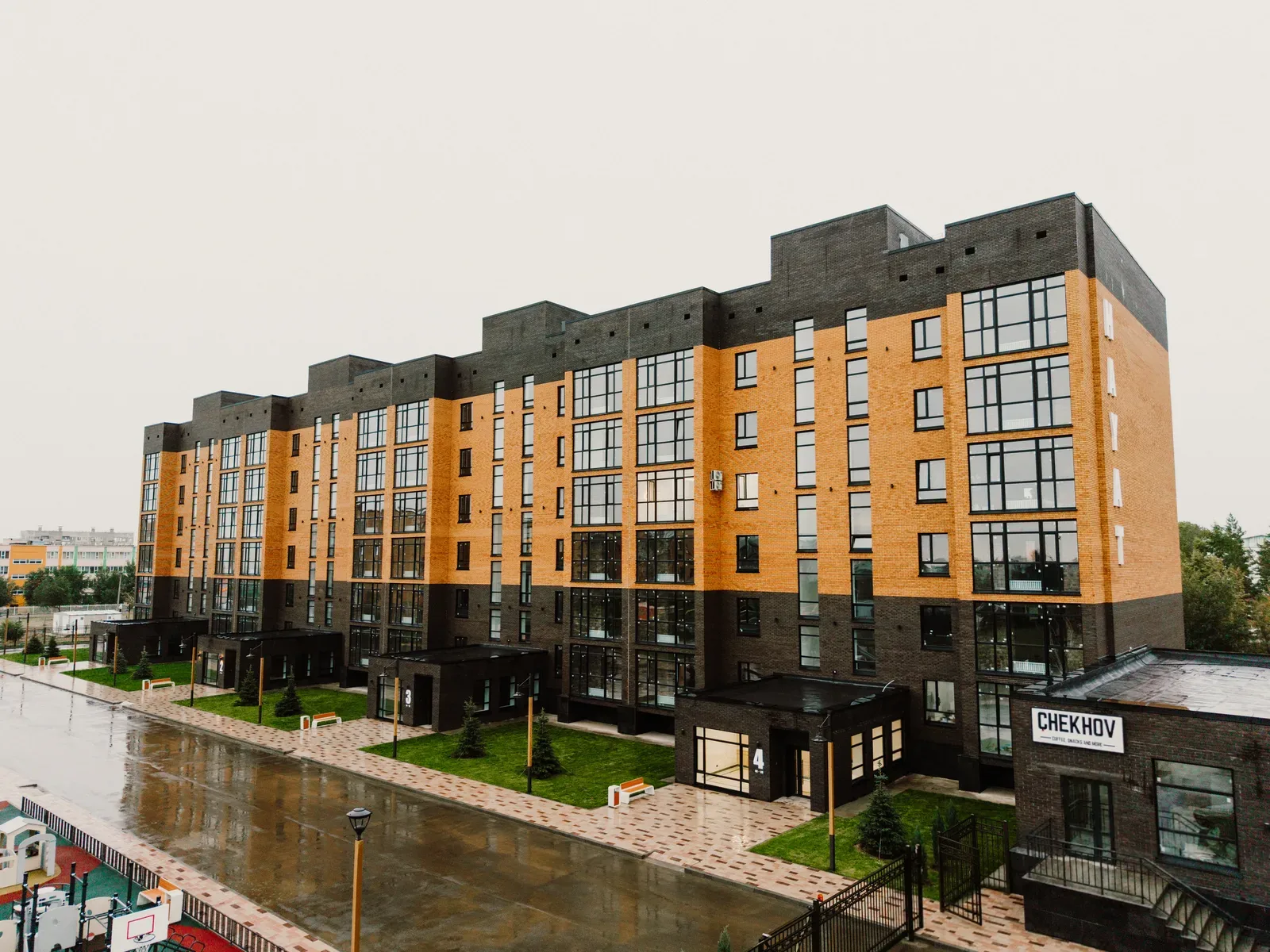
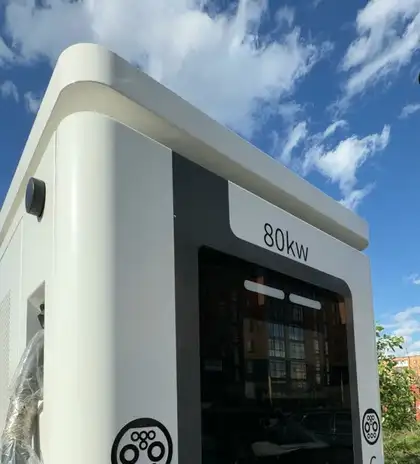
HAYAT Residence in Ekibastuz is useful here as an example, not as the only scenario. A business-class building at 24 Akademik Mardenov Boulevard is already in operation: finished homes are on sale, not a construction pit. The complex has an 80 kW charging station and underground parking with a lift to the residential floor. That is the combination of 'capacity + location + access,' not a plaque by the fence.
What an 80 kW Station Means for a Resident
80 kW is a fast level for a residential courtyard. Typical home AC charging often sits in the 7–22 kW range: convenient overnight, slow by day. At 80 kW, range recovers faster. That matters if the EV is the primary vehicle, not a second car 'for weekends.'
In practice, a resident gets three effects:
- at night — a full cycle without a trip to a public charger;
- by day — the chance to top up between errands, rather than routing around a station;
- in winter — reserve for cabin pre-heat and for the battery capacity drop in frost, which Pavlodar Region cannot ignore.
A caveat, without illusions: real speed depends on the car, the port type, temperature and whether the post shares power with a neighbour. The 80 kW figure speaks to the engineering already in place. It does not promise that every crossover will draw 80 kW in January at −30. But it is certainly better than a household socket and better than a promise to 'install it someday.'
A Gated Courtyard and Charging Work Only Together with Parking
A car-free courtyard works well with a playground and quiet. With an EV, it works only if charging has gone underground. Otherwise the cable crosses the pedestrian zone, snow buries the post in winter, and a 'minute by the entrance' turns into a permanent parking spot.
The working scheme is this: a pedestrian courtyard above, the technical layer below. Underground parking with a lift to the floor removes the winter quest with bags and a child. CCTV with online access, IP intercoms and smart locks close the loop: you see who is at the post, and you do not leave an expensive cable in a grey zone.
HAYAT Residence follows exactly this logic: a gated courtyard without cars, underground parking, an 80 kW station, cameras, intercoms, smart locks. Six floors, brick, storage rooms on the floors, designer lobbies — that is about the building itself. Charging is about how you leave that building every morning. The same principle is worth seeking in any complex: the engineering should come together, not live on separate brochure slides.
Checklist: An Apartment for an Electric Vehicle
The list below works in Ekibastuz, Karaganda and Almaty. It does not matter whether you are viewing this building or another. What matters is not buying a handsome façade and then fighting the management company for a socket.
| Check | Why it matters | What a proper answer looks like |
|---|---|---|
| Power and station type | Charging time depends on this | Specific kW, number of posts, AC or DC |
| Where the post stands | Winter, cable, queues at the entrance | Underground or covered parking, not a lawn by the playground |
| Energy metering | So you do not pay 'for everyone' and do not conflict | Separate metering and clear management rules |
| Who has access | Queues and cable security | Rules for residents and guests, access control |
| Building power reserve | The station must not cut out lifts and pumps | The developer or management names the dedicated capacity |
| Link with parking | Everyday comfort, not a one-off 'feature' | Lift to the residential floor, a space next to the post |
| Security loop | The car and the connector at night | Gated courtyard, cameras with online access |
In Brief
Courtyard charging is needed today because electric vehicles already drive across Kazakhstan, and the urban network does not promise you morning range. Look at kilowatts, parking, metering and access — that matters more than a handsome line in a brochure. HAYAT Residence at 24 Akademik Mardenov Boulevard is an example where an 80 kW station, underground parking and a gated courtyard come together in a completed building by Gidroprom LLP. Apply the same checklist to any complex: whether you buy here or not, the question is one — can you charge where the car spends the night.
Want to see an apartment in person?
The building is complete and occupied. We will show you layouts, floors and the view from the window — choose a convenient time.