September 4, 2026 · 5 min read
What Sets Business Class Apart from Comfort Class: 9 Signs
Business class is not a plaque on a banner. Nine signs that set business-class homes apart from comfort class: materials, ceilings, parking, courtyard, and service.
On the new-build market, the words “comfort” and “business” often share a single banner and explain almost nothing. Housing class is not a marketer’s taste. It is a set of decisions you cannot retrofit after move-in: structure, engineering, courtyard, parking, security. Below are nine signs that set business-class homes apart from comfort class. You can check them on any property — even if you are not buying from us.
Why Comfort and Business Are So Easy to Confuse
Comfort class meets the basic expectations of an urban family: a lift, a reasonably quiet courtyard, a façade neater than typical mass housing. Business class begins where long-horizon solutions appear, along with a different degree of privacy. Advertising blurs the line, so on a viewing look not at the letters in the brochure, but at what the building is made of and how it will be lived in five to seven years from now.
In smaller cities the choice is narrower than in million-plus metros, which makes it all the more important not to buy “business” on the name alone. If you are looking for business class in Ekibastuz, measure the building against specific signs, not a handsome visualization. A completed home is more honest than a foundation pit: you can see the façade, the courtyard, the lift, and the real neighbors.
Façade, Scale, and Windows
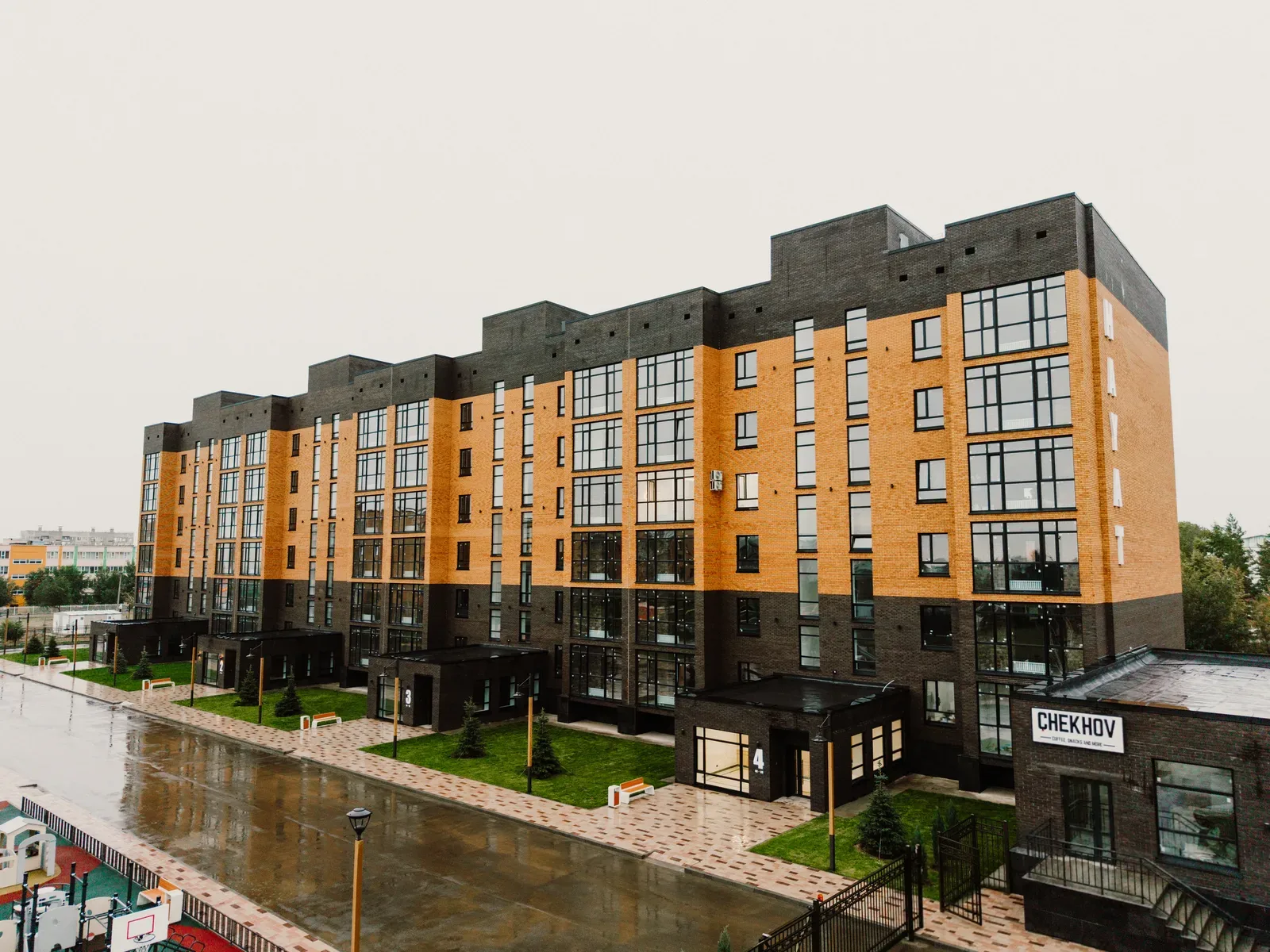
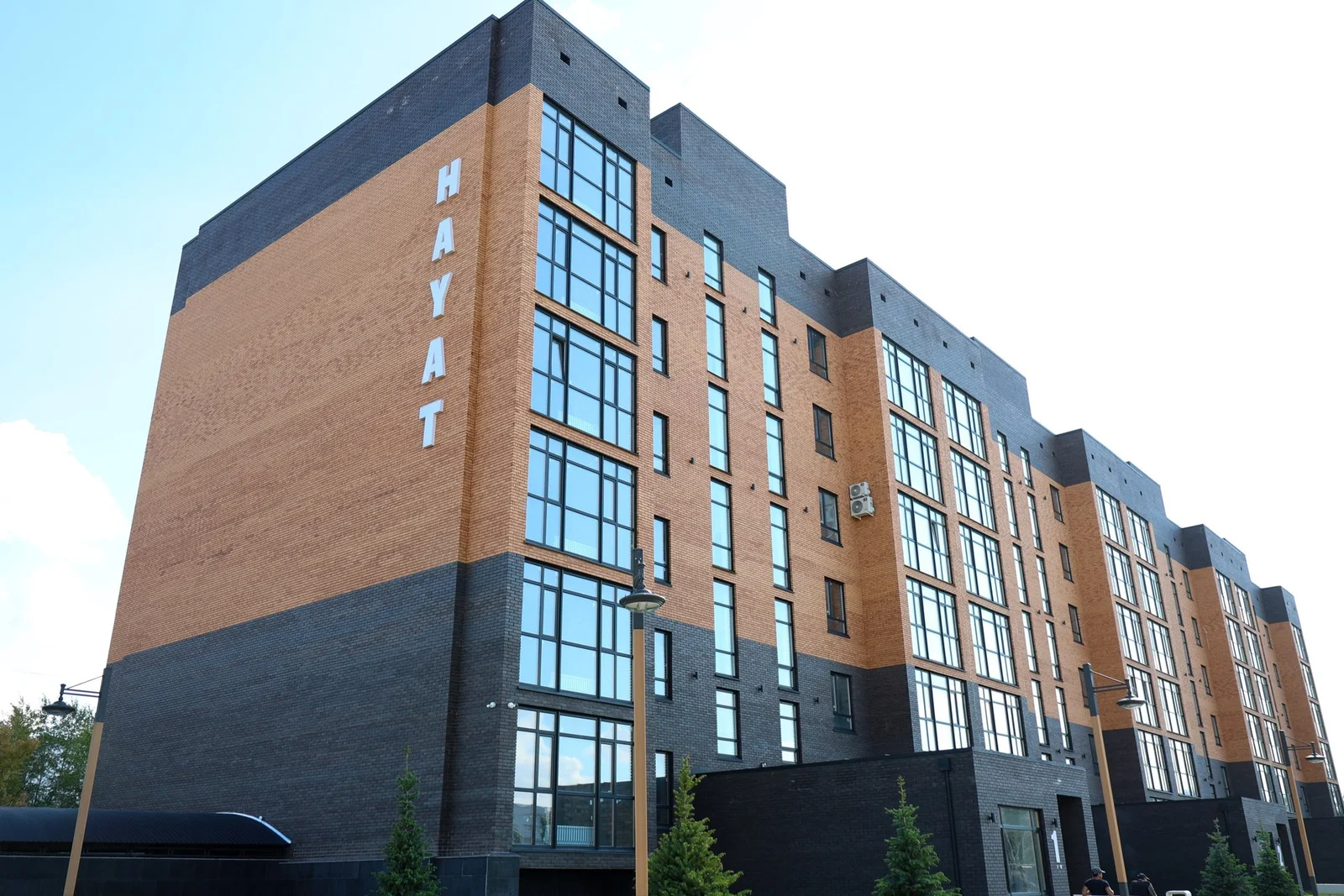
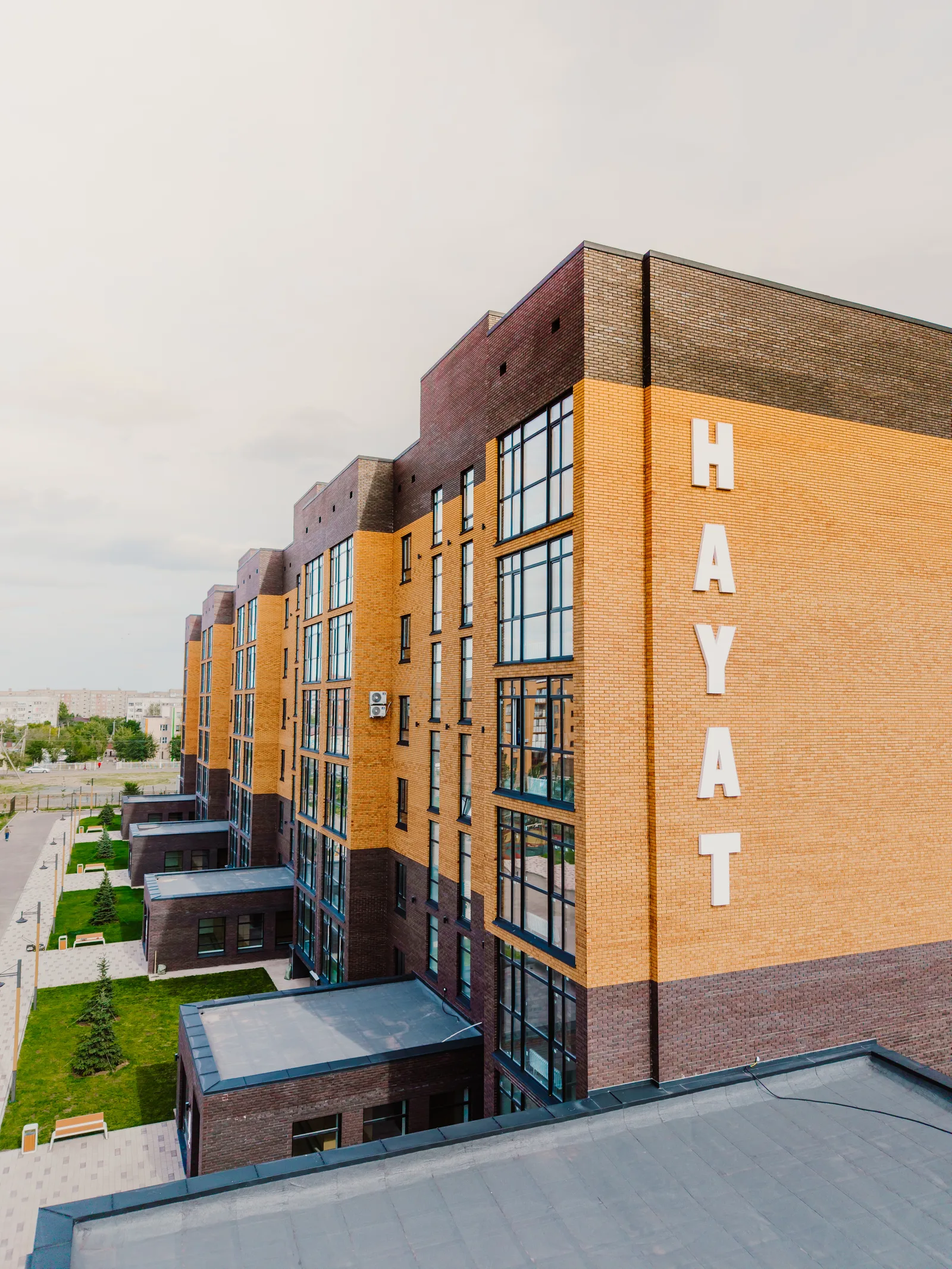
Sign 1. Structure and plinth. Comfort often rests on panels, blocks, or inexpensive brick with a thin decorative layer. Business-class homes are typically built of solid brick and do not skimp on the plinth: it takes the dirt, salt, and knocks. At HAYAT Residence, six storeys are clad in ochre-yellow clinker; the plinth is dark graphite marble. This is a wear-resistant building envelope, not a picture on a banner.
Sign 2. Intimacy instead of density. Comfort favors many apartments per floor and high-rise massing: that is a cheaper way to spread the cost of land and risers. Business keeps fewer neighbors — a quieter lift, a simpler entrance, fewer strangers looking into the courtyard. A useful benchmark: a low-rise building, several entrances, apartments counted in dozens, not hundreds. Four entrances and sixty apartments on six floors — density closer to business logic than to mass development.
Sign 3. The window as engineering. Comfort class installs a standard insulated glass unit and ordinary opening geometry. In business class, the window works for light, quiet, and warmth: panorama plus energy-saving glass. You see it on the bills and in whether every room needs air conditioning all summer.
The Apartment: Floor Area, Ceilings, Finishes
Sign 4. Family-scale space, not a studio plus a little. Comfort class often lives off lots of 40–70 m². Business begins where there is room for a study, a dressing room, and a kitchen-living area without a daily compromise. A range of 112–190 m² with a free-plan layout is a different scenario: you do not move the sofa to open the wardrobe.
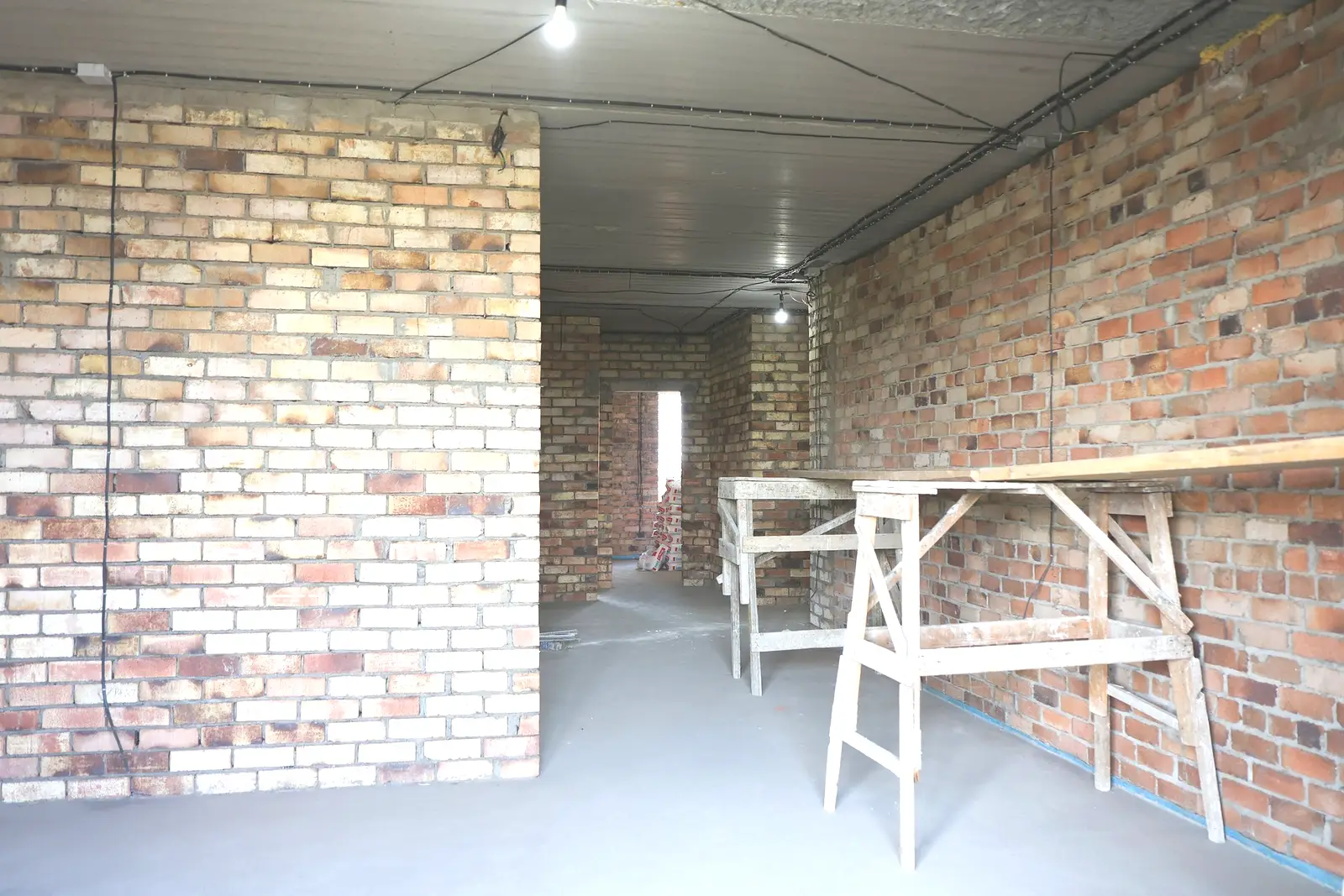
Sign 5. Three metres and a white box. A 2.7 m ceiling is typical comfort. Three metres change the proportions, allow proper light, and do not press down once the case furniture is in. An unfinished apartment in business class is not a shortcoming — it is a chance not to demolish someone else’s walls and not to live in someone else’s taste. A free-plan layout only makes sense if load-bearing walls do not cut the room in half: that is visible on the plan, not in a manager’s pitch.
Parking, Courtyard, and Security
Sign 6. The car does not compete with the stroller. In comfort class, parking is often at street level or a bay along the playground. Business takes cars underground and provides a lift from the parking level straight to the residential floor: no hauling bags across the street, no crossing paths with children. A closed courtyard without cars is how the grounds stay clean, not a brochure option. A “built-to-grow” marker: an 80 kW charging station for electric vehicles.
Sign 7. An access loop without a guard on a chair. CCTV with online access, IP intercoms, and smart locks secure the courtyard, parking, floor, and apartment. Comfort more often stops at an intercom and a single camera at the entrance. Storage rooms on the floors follow the same logic: seasonal things do not live in the corridor and do not occupy the balcony.
Building Service and the Setting Around It
Sign 8. Common areas that survive year three. Designer lobbies with contemporary finishes, lighting, materials that can take strollers and sand. In comfort class this is often linoleum and paint “for handover.” A Romana playground, a workout area, basketball, living spruce trees instead of a patch of lawn — the courtyard as an extension of the apartment. On the ground floor of HAYAT Residence, the CHEKHOV café operates with a hall, a play area, and a VIP room: service without a trip to another district.
Sign 9. A setting you do not wait years for. Business class depends less on a picture of a future microdistrict. A walk and a cultural venue are already next door. Baiterek Square across the road and the Öner City Cultural Centre are a route after move-in, not a promise in the brochure. A completed building is more honest than a foundation pit: the surroundings are visible with your own eyes.
A Buyer’s Checklist
On a viewing, do not argue with the presentation. Bring three things and walk the table. If more than half the points sit closer to the “comfort” column — you are looking at comfort, whatever the building is called.
- Floor plan and parking layout — not only the apartment brochure
- A phone, to check the online cameras and IP intercom as a resident would
- A tape measure: ceiling height and the logic of the openings are visible at once
| Question | Comfort class | Business class |
|---|---|---|
| What are the façade and plinth made of? | Panel, block, thin décor | Brick, clinker, stone on the plinth |
| How many apartments and floors? | High-rise, hundreds of lots | Low-rise building, dozens of apartments |
| Ceilings and windows | Around 2.7 m, standard glazing | Around 3 m, panorama, energy-saving glass |
| Floor area and layout | Compact lots, rigid walls | Family-scale spaces, free-plan layout |
| Where is the car? | Courtyard, pocket, open lot | Underground parking, lift to the residential floor |
| Courtyard | Cars and children in the same loop | Closed courtyard without cars, proper playgrounds |
| Access and storage | Intercom, camera at the entrance | Online cameras, IP intercoms, smart locks, storage rooms |
| Ground floor and surroundings | Infrastructure promised later | Service already inside, city venues nearby |
If the building is already occupied, check what the render hides: how the lobby smells, whether you can hear neighbors through the wall, whether there are puddles at the parking entrance, whether the gate opens without endless calls to security.
Comfort class is an honest choice if you want an urban standard without paying extra for intimacy. Business-class living makes sense when you are paying for structure, car logistics, a closed courtyard, and access control — things a good renovation cannot replace. The nine signs work in any city: measure the property against them, not against a slogan.
See how these solutions come together in a completed building at HAYAT Residence, 24 Akademik Mardenov Boulevard. The developer is Gidroprom LLP. Sales office: +7 775 333 30 14, phone and WhatsApp, daily 9:00–20:00. Website hayat-residence.kz. Even if you take an apartment in another complex, walk the checklist on site — it is cheaper than arguing with a class name after the deal.
Want to see an apartment in person?
The building is complete and occupied. We will show you layouts, floors and the view from the window — choose a convenient time.