August 19, 2026 · 5 min read
Car-Free Courtyard: Child Safety and Quiet Living
A car-free courtyard lowers risk at home and removes engine noise. How a secure courtyard works and what to check when choosing an apartment — a practical guide.
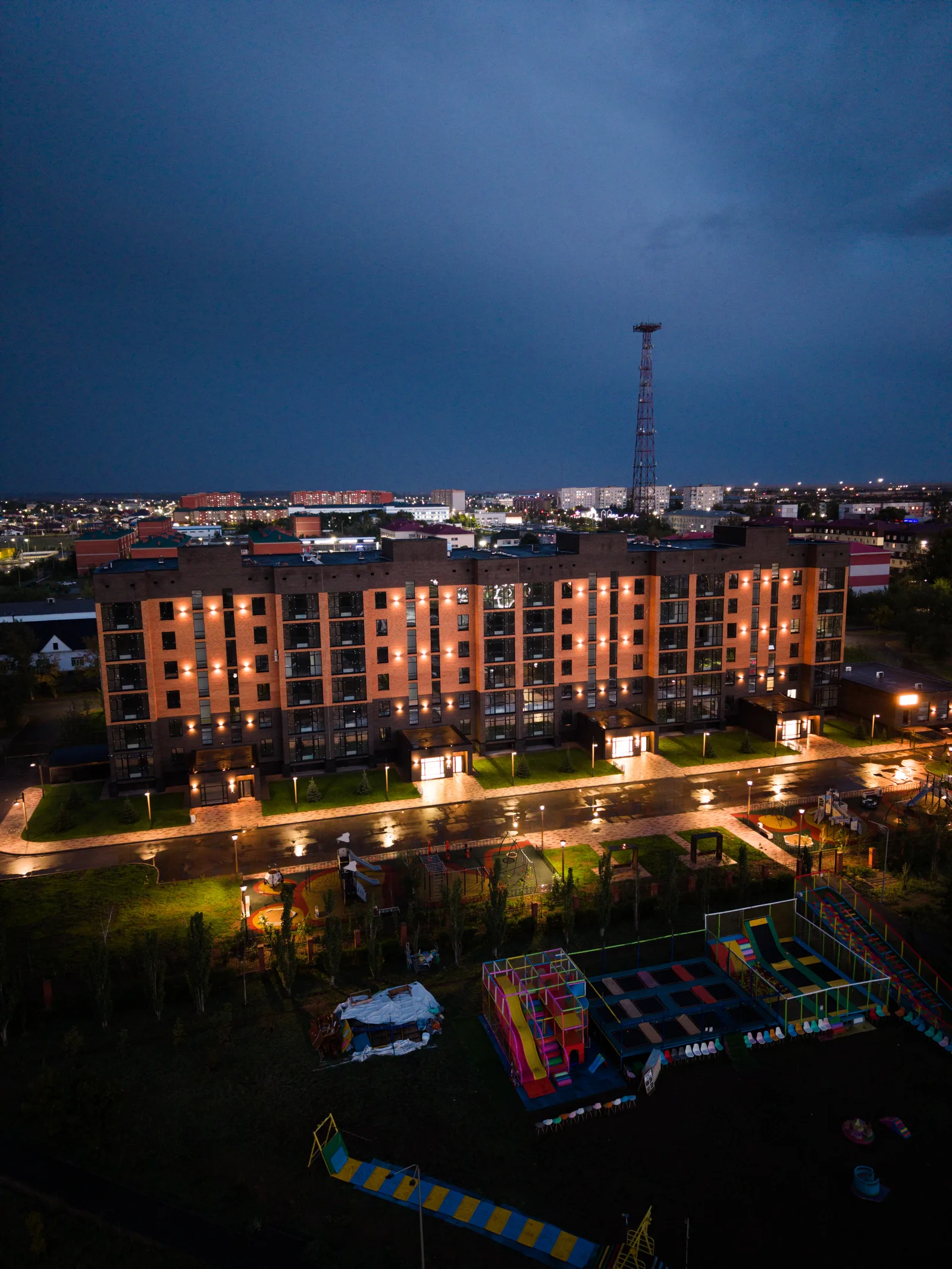
When a family chooses an apartment, layout and the view from the window matter. Everyday comfort, however, is more often decided by the courtyard. When cars stand at the entrances, children play between bumpers, and evenings carry the rumble of engines. A closed, car-free courtyard changes the picture: less risk, less noise, more living space.
Below is a practical briefing. What a secure courtyard delivers, how to verify it, and which details separate a brochure promise from a lived environment. Examples are drawn from completed homes, including HAYAT Residence in Ekibastuz, yet the criteria apply to any complex.
What a Closed Courtyard Is — and What It Is Not
A closed courtyard is a territory strangers do not enter freely, and where cars do not park between the entrances. Control is built in layers: a clear perimeter, intercom access, video surveillance, underground parking. A car-free courtyard means parking spaces are taken underground or beyond the building line, and the courtyard remains pedestrian.
Confusion begins with wording. A “closed territory” without parking often turns out to be a barrier gate and the same cars inside. What works is the combination: parking, access control, and rules that are convenient to follow.
- Underground parking with a lift to the residential floor removes the temptation to “leave it for five minutes at the entrance.”
- IP intercoms and smart locks limit the flow of casual visitors.
- Video surveillance with online access gives residents control, not merely an archive “just in case.”
In a business-class building this is baseline logic, not an option: the courtyard is shared living space, not a driveway and not an improvised parking lot.
Child Safety: Risks Visible from the Playground
A safe courtyard for a child is a predictable environment. The principal risk at home is not an abstract “stranger,” but a car at low speed. The driver cannot see a preschooler over the hood; a child may not hear a quiet electric vehicle. The second risk is uncontrolled entry. The third is a playground beside a driveway or in a blind spot.
- No through-traffic across the courtyard and no “pockets” for guest cars by the children’s area.
- A playground from a known manufacturer, with proper surfacing and age-based layout. Completed complexes often feature Romana equipment.
- Sightlines from windows and cameras: the playground should not hide around a corner.
- Sports kept apart from toddlers. Workout and basketball belong to a different age and a different rhythm.
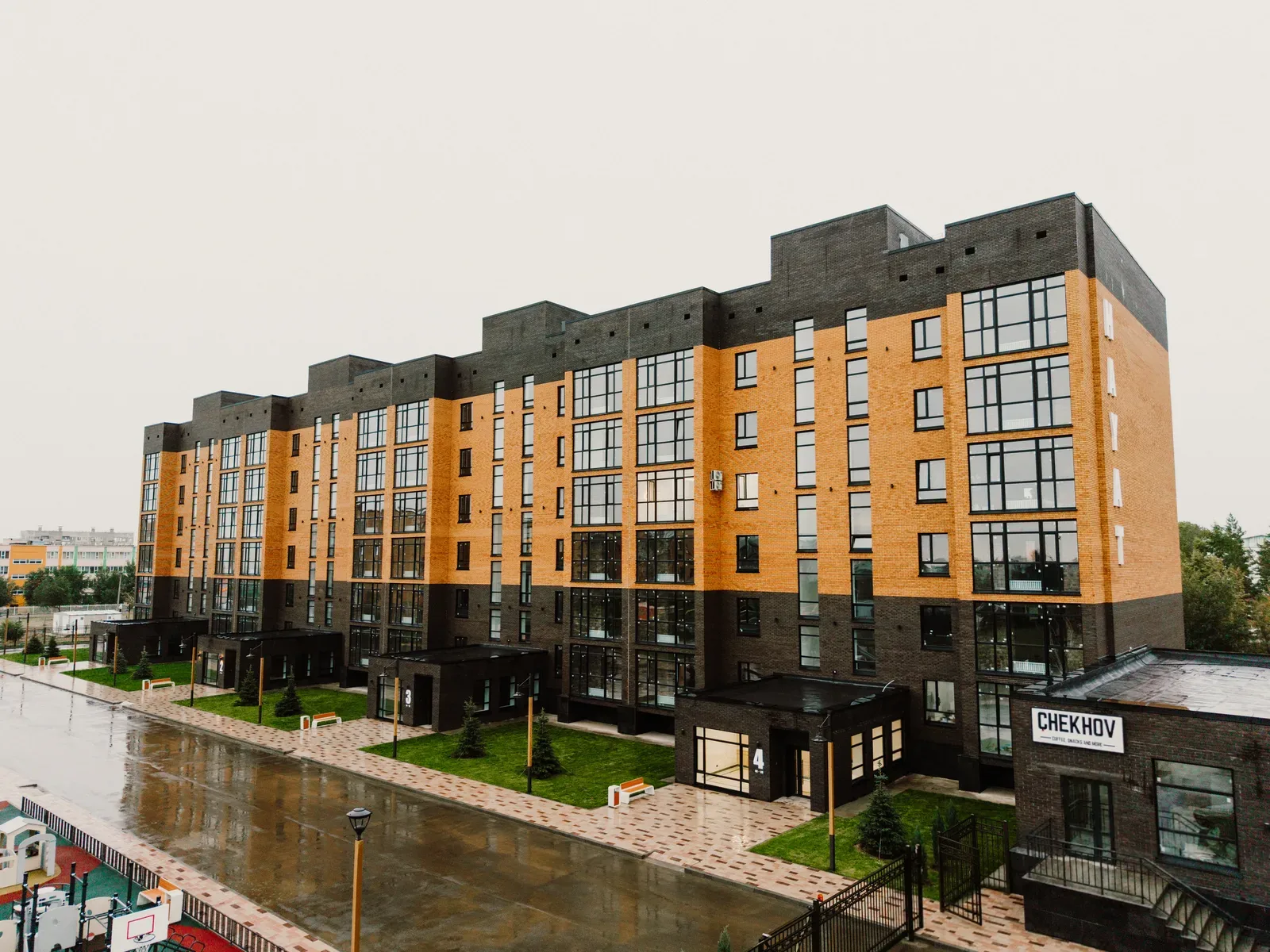
At HAYAT Residence the courtyard is closed to cars; there is a Romana children’s playground and a sports court with workout equipment and basketball. This illustrates the principle: play and sport do not share asphalt with cars. The same principle is worth requiring in any home you compare.
Look separately at the ground floor: a café with a hall, a playroom and a VIP room keeps guests inside, not on the swings.
Quiet in the Courtyard: Where It Comes From
Quiet in the courtyard is a consequence of planning. Noise sources at home are predictable: parking, winter engine warm-up, unloading at the entrance, late-night guest arrivals. Once cars are taken underground, those sounds leave with them. A car-free courtyard works more directly here than any “do not honk” sign.
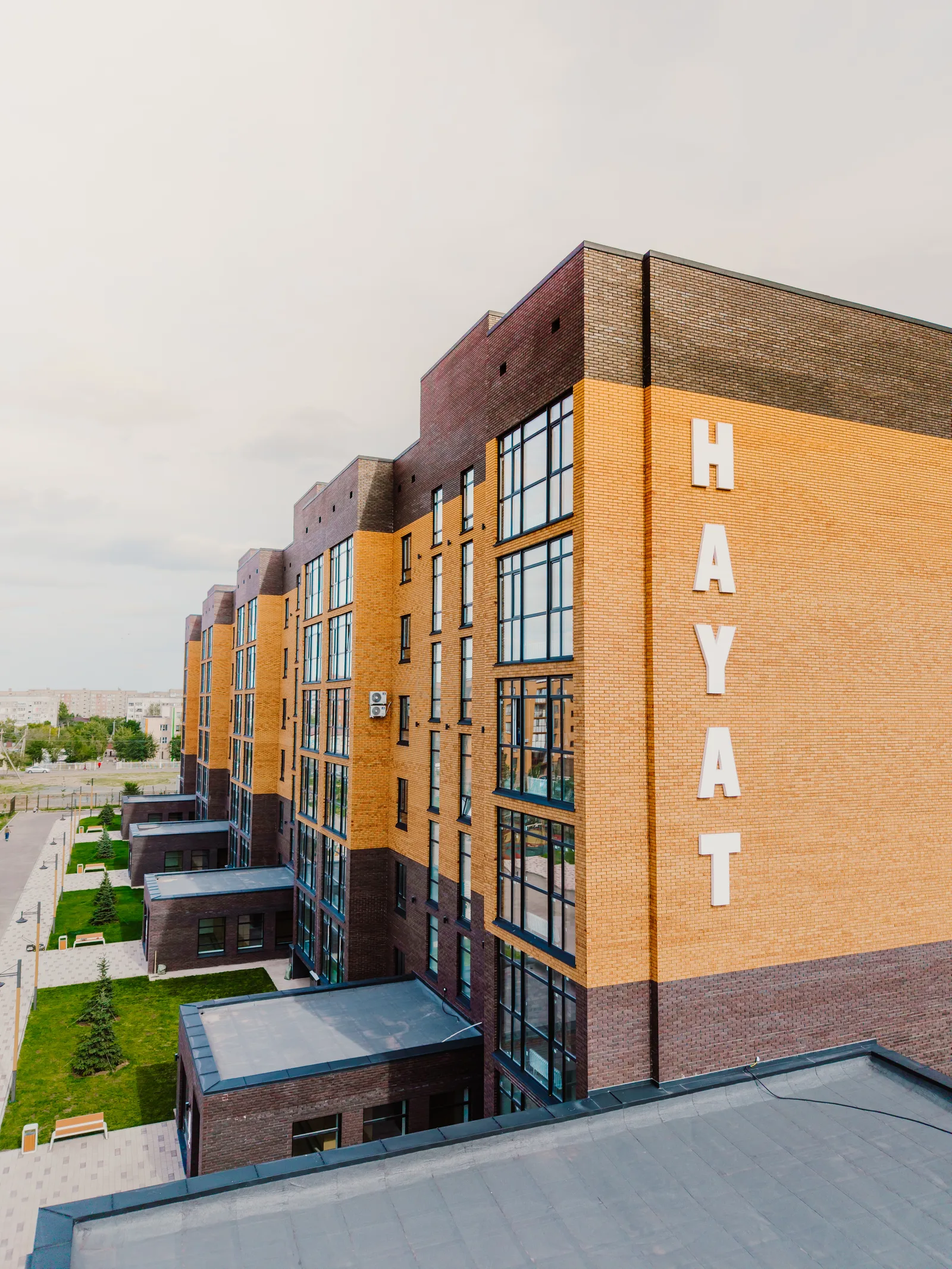
Landscaping, a substantial facade and the windows help further. Spruce trees and dense planting absorb echo. Brick and a stone plinth do not make the courtyard quiet on their own, yet a heavy facade “rings” less from the street. Energy-efficient glass and ceilings of about three meters already affect the apartment: less street background, a calmer indoor climate.
The courtyard does not cancel the city. A square across the road and a cultural center nearby add to walks — provided the courtyard remains a quiet inner contour and city life stays outside.
Checklist: How to Assess a Courtyard in One Visit
Do not trust renders. Visit on a weekday and a weekend, morning and evening. If the building is occupied, watch how people behave, not the brochure. The checklist below is universal: you can walk any complex with it in 15–20 minutes.
| What to check | Sign that it works |
|---|---|
| Cars entering the courtyard | No parking at the entrances; underground parking and a lift to the floor |
| Access control | Intercom, smart locks, a clear perimeter, a gate that is not “always open” |
| Cameras | Coverage of playgrounds and entrances, online access for residents |
| Children and sport | Zones separated, proper surfacing, no driveway nearby |
| Landscaping | Living trees, not a single lawn “for handover” |
| Ground floor | Guest flow does not pass through the courtyard play area |
| Storage | Storerooms and stroller rooms exist; the lobby is not a warehouse |
Ask separately how a guest by car reaches the parking and how a resident with a stroller goes upstairs. If the answer is vague, a car-free courtyard is likely to remain a slogan.
What Holds the Courtyard Beyond the Fence
A closed courtyard rests on the building’s engineering. An open-plan layout and an unfinished apartment let you shape the home around yourself. You will not rebuild the courtyard after purchase. So look at the load-bearing structure of comfort, not only the tiles on the playground.
- Underground parking with a lift straight to the residential floor — bags and a stroller do not travel through the street.
- Floor-level storerooms — less clutter in the apartment and the lobby.
- An EV charging station shows that parking is designed for the long term, not left to chance.
- Designer entrance halls with contemporary finishes — a signal that common property will not be abandoned after move-in.
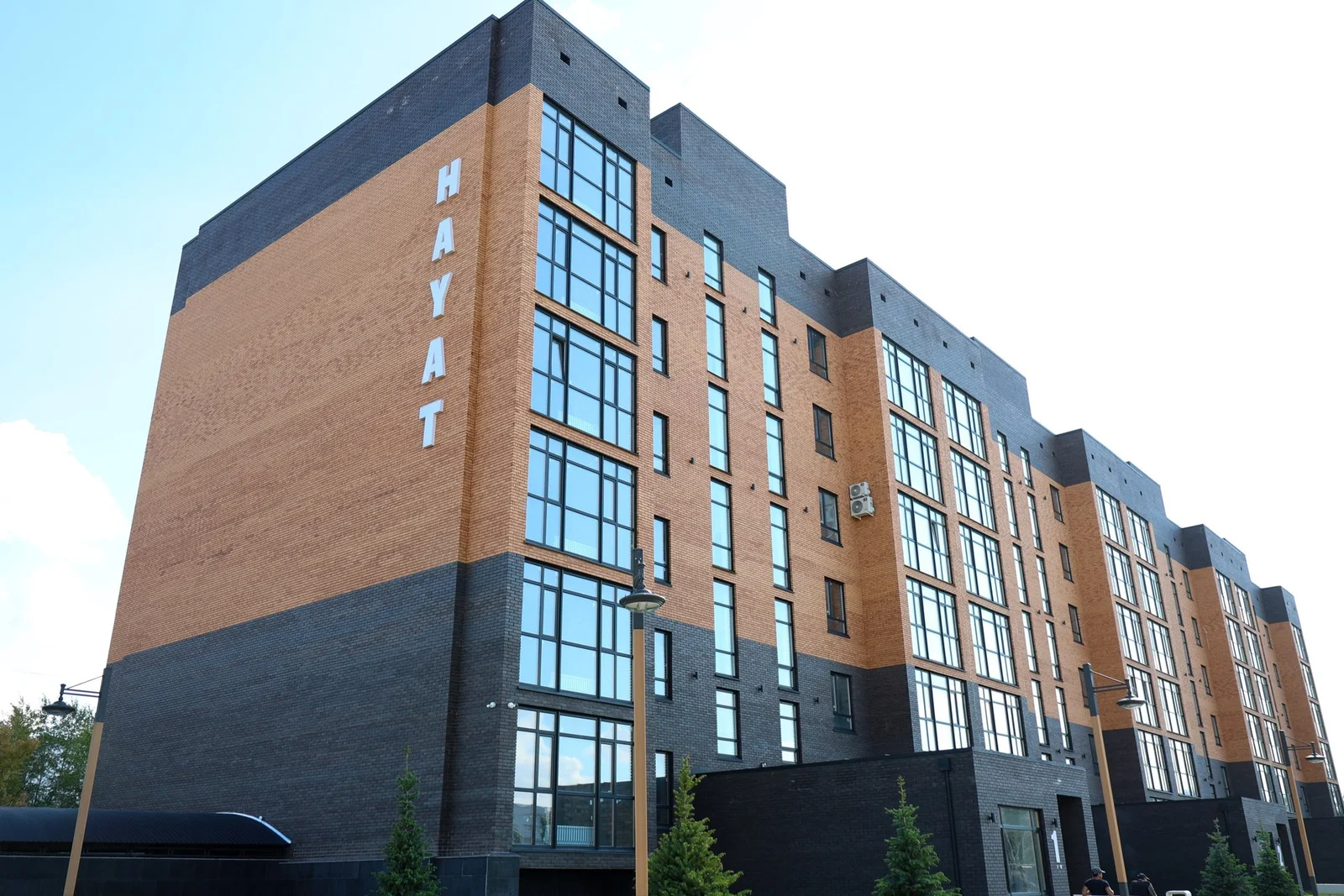
HAYAT Residence at 24 Akademik Mardenov Boulevard in Ekibastuz is an example of a completed six-story brick building with 4 entrances and 60 apartments of 112–190 m². There is underground parking with a lift to the residential floor, an 80 kW charging station, video surveillance with online access, IP intercoms, smart locks, storerooms, landscaping with spruce. The developer is Gidroprom LLP. On the ground floor — CHEKHOV café; nearby, Baiterek Square and the Өнер City Cultural Center. This is a benchmark for the set of solutions: ask the same questions in any sales office.
Who Needs a Courtyard Like This
For families with children a car-free courtyard has a simple effect: the child goes downstairs, and no one has to keep watch at the window. For older residents a level pedestrian contour without ice from engine warm-up matters more. If you are used to parking under the window, a closed courtyard will irritate — that is a different scenario, better acknowledged before the deal.
You cannot add a courtyard later. You will finish the apartment; with an open plan you will assemble the rooms around yourself. Perimeter, parking and playgrounds are fixed forever.
A safe courtyard is not a guard with a baton and not a handsome render. It is a car-free courtyard, a closed perimeter, clear access, cameras on the playground and infrastructure that does not push cars toward the entrances. Check this on foot, at different times of day, preferably in an already occupied building.
If you are viewing completed homes in Ekibastuz, the HAYAT Residence sales office: +7 775 333 30 14, WhatsApp, daily 9:00–20:00, website hayat-residence.kz. If you are choosing another complex — take the checklist with you. The questions are the same.
Want to see an apartment in person?
The building is complete and occupied. We will show you layouts, floors and the view from the window — choose a convenient time.