August 17, 2026 · 5 min read
A Storeroom at Home: Bikes, Tires, and Seasonal Belongings
Where to keep bicycles, tires, and seasonal belongings without turning the balcony into storage. How floor-level storerooms work in a new-build, and what to check.
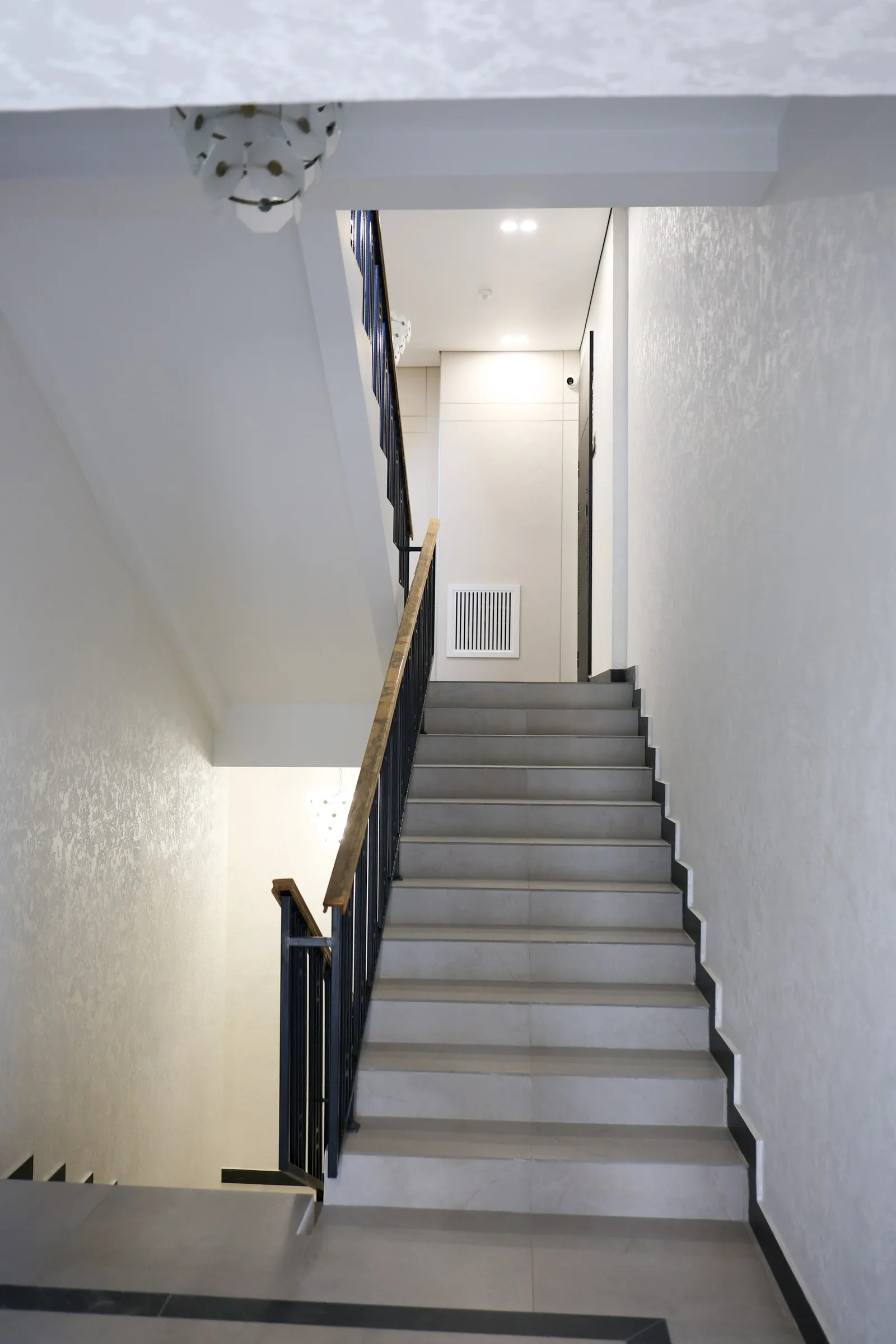
Open-plan layouts and high ceilings create volume, but they do not solve storage. A bicycle in the hallway, winter tires against the wall, boxes of skis on the balcony—that is how living space disappears even in apartments of more than a hundred square meters. A storeroom in the building is not a brochure checkbox: seasonal gear and sports equipment belong next to the apartment, not in the corridor and not behind panoramic glass.
Below is a practical walkthrough: what belongs in a floor-level storeroom, what is better left out, how to inspect the space in any new development, and why the floor is more convenient than a balcony or a distant basement. We use one residential building as a focused example; the same logic applies if you are considering a complex by another developer.
Why a Floor-Level Storeroom Beats a Balcony or a Basement
In a contemporary home, the balcony is light, a view, and sometimes a study. The moment tires and a stepladder appear, the room stops working. A basement or a box at the far end of the parking garage means extra floors, dirt from the wheels, and a promise to “pick it up on the weekend” that stretches into a month.
Storerooms in a new-build on the same floor as the apartment offer a short route: step out, open, take, return. You notice this not once a year, but on an ordinary evening—with a stroller, two sets of tires, or a bicycle needed after work, not “sometime in season.”
In practice, the floor wins on three counts:
- the living area stays separate from “dirty” storage—sand, grease, and rubber remain behind the storeroom door;
- there is no need to haul seasonal items across the courtyard, up the stairs, and through the neighbors’ lobby;
- the balcony and the view from the window remain residential, not warehouse space.
If the home has panoramic windows with energy-efficient glass, stacking tires behind them is especially pointless: you pay for light and a view, and you get a rack.
What Typically Goes In—and What Should Stay Out
A floor-level storeroom is not a second wardrobe and not a cellar. It is the logical place for things you do not use every day, but that should be close at hand without a trip to a garage outside the city.
- bicycles, scooters, skis, snowboards, rollerblades;
- winter and summer tires, if there is no dedicated space in the parking garage;
- suitcases, seasonal textiles, holiday décor;
- a stepladder, tools, rarely used equipment;
- archives, “just in case” appliances, boxes left after renovation.
Do not bring food, chemicals, or anything sensitive to temperature and humidity into the storeroom if the space is not heated consistently. Flammable liquids and cylinders are a fire-safety matter, not a convenience. Valuables without proper locking do not belong there either: a storeroom in the building is logistics, not a safe. What you use every day is better kept in the apartment: otherwise you will start visiting the storeroom the way you visit the refrigerator.
A short rule: the storeroom is for seasonal items and bulk; the apartment is for the everyday; parking is for what gets dirty and smells of rubber—if a box is allowed under house rules.
How Daily Life Works When the Storeroom Connects to Parking by Elevator
The value of a floor-level storeroom reveals itself not on the plan, but on the route. If the elevator from underground parking opens directly onto the residential floor, tires and a bicycle never cross the courtyard and never wait while you free your hands on the stairs.
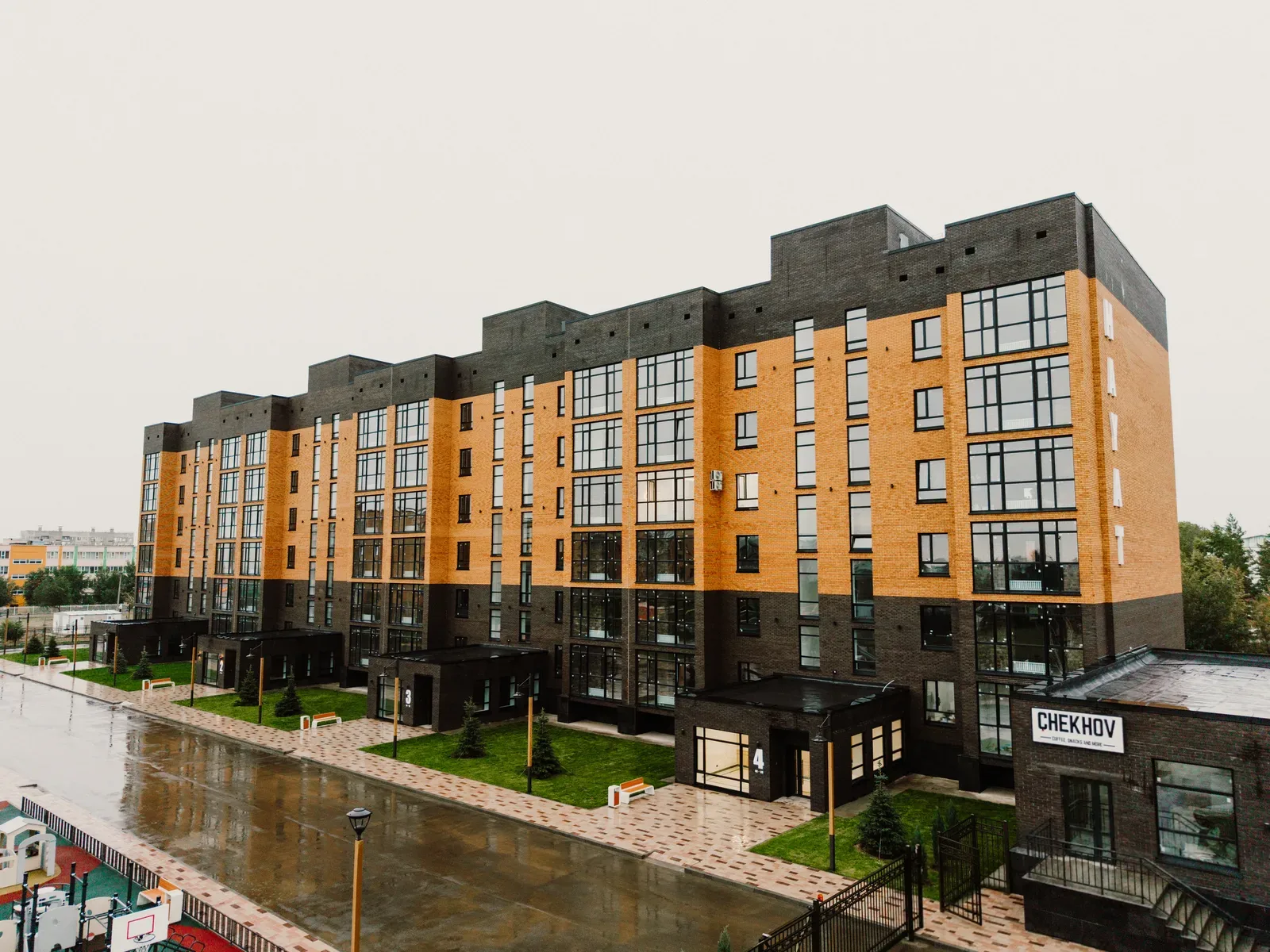
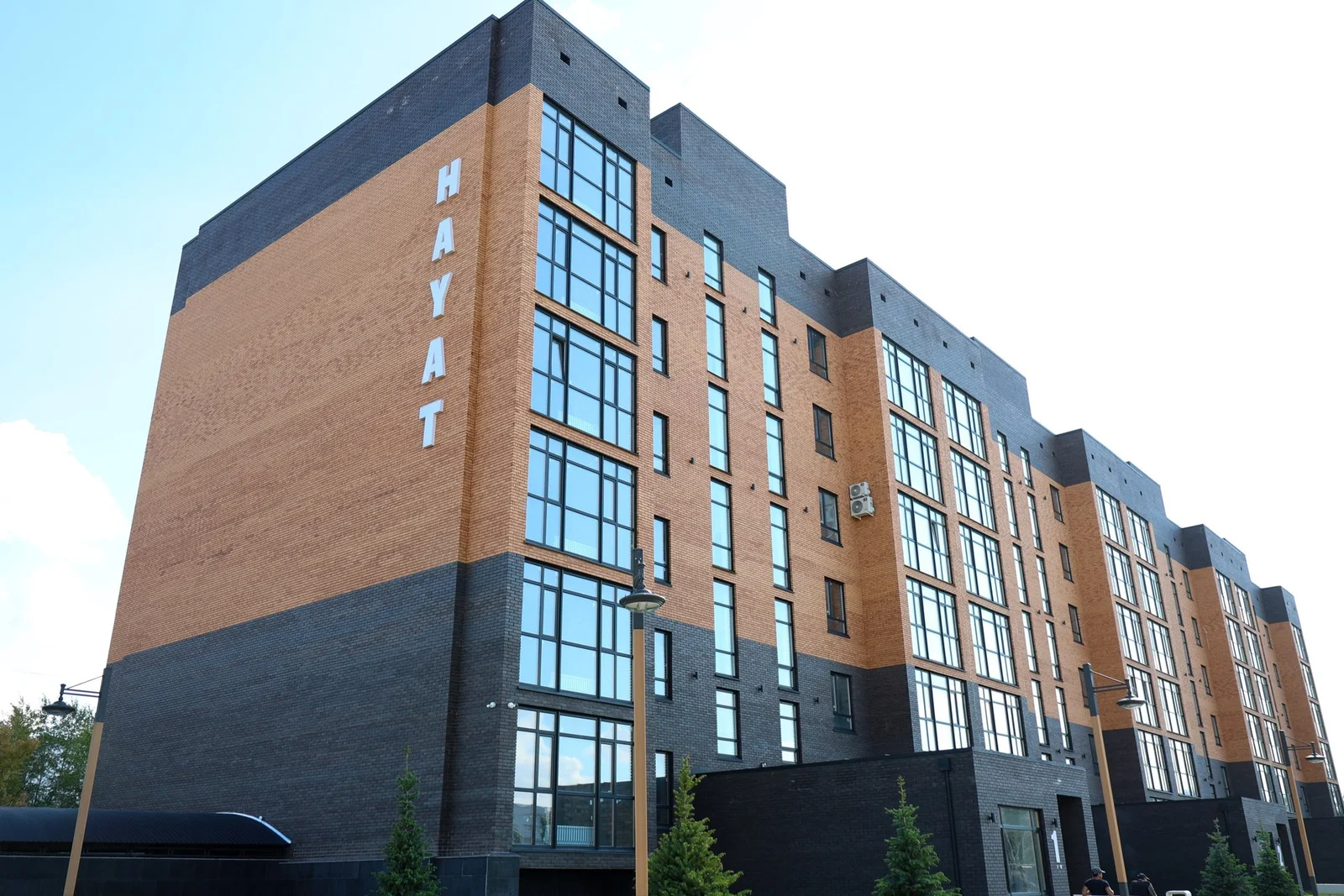
At HAYAT Residence in Ekibastuz (24 Akademika Mardenova Boulevard), that connection is already in place: a business-class building, commissioned and occupying, six floors, brick construction, four entrances, sixty apartments of 112–190 m². Floor-level storerooms complement underground parking with elevator access to the residential floor. A car-free gated courtyard, CCTV with online access, IP intercoms, and smart locks here are about a predictable path—“car — storeroom — apartment”—not a dim cubby in a distant wing.
The same logic is useful in another complex: look not at a “storage” square on the brochure, but at how many doors and meters lie between parking, the unit, and your front door. If the courtyard is closed to cars, the bicycle still should not live in the lobby—that is what the storeroom is for, not “leaving it by the courtyard tree.”
Where Everything Goes: A Practical Table
A guide, not dogma. The rules of a particular building and management company may be stricter—read them before you buy, not after the first conflict in the residents’ chat.
| Item | Apartment | Floor-level storeroom | Parking / box |
|---|---|---|---|
| Everyday clothing, documents, daily-use devices | Yes | No | No |
| Bicycle, scooter, skis | Only if you use them constantly and have the space | Yes, if dry and lockable | Yes, if it does not obstruct traffic and house rules allow |
| A set of tires | No | Yes, in covers, not in the aisle | Preferably, if there is a box |
| Suitcases, décor, seasonal textiles | Minimum | Yes | No — dust and the smell of rubber |
| Stroller | If needed every day | Yes overnight and off-season | No |
| Fuel, cylinders, paint | No | No | Only if explicitly allowed and safe |
Checklist: What to Look For in Any New Development
Storage rooms in a new-build may sit on the floor, in the basement, or in a separate block by the parking garage. The name is the same; the convenience is not. Before the contract, walk the route yourself—not on a render.
- Where the unit actually is: the same floor, another stairwell, the basement. The floor is almost always more convenient.
- How many doors and meters from your apartment and from the parking elevator.
- Whether it locks separately, who has access, whether there is CCTV in the corridor.
- Heating, ventilation, humidity: ask the developer and the management company; do not guess from a picture.
- House rules: whether tires and bicycles may be stored, whether strollers are banned from the lobby.
- Fire exits: the storeroom must not block evacuation or sit overlapping an electrical panel.
- Size relative to the household. One bicycle and four sets of tires are already different scenarios.
- Who cleans the corridor by the units and who is responsible for the lights. A small detail from which conflicts grow.
Look separately at how the building itself is arranged: an elevator from parking to the residential floor, a gated courtyard, a proper entrance. In a brick six-story building with designed lobbies, a storeroom feels different from a long corridor without windows or cameras. Unfinished apartments and open-plan layouts, as at HAYAT Residence, specifically require deciding in advance where storage will live: otherwise the first renovation will consume corners for shelving that would be more logical beyond the apartment door.
A Brief Conclusion
A storeroom in the building is not “bonus square meters,” but a way not to turn the hallway, the balcony, and the view into a warehouse. Look at the route, the locking, and the storage rules—not only a checkbox in the complex description. Bicycles, tires, and seasonal items should be close, dry, and not in a living room.
If you are choosing finished housing in Ekibastuz, floor-level storerooms at HAYAT Residence can be viewed together with the apartment and parking: the building is occupying, finished homes are for sale. Gidroprom LLP sales office: +7 775 333 30 14 (phone and WhatsApp), daily from 9:00 to 20:00, website hayat-residence.kz. Even if you buy in another complex, the checklist above remains the same—first the route of your belongings, then the layout of the sofa.
Want to see an apartment in person?
The building is complete and occupied. We will show you layouts, floors and the view from the window — choose a convenient time.